Treating Heartburn & Acid Reflux
Where does the Reflux Acid come from?
Heartburn, reflux, GORD (Gastro-oesophageal reflux disease), and acid indigestion are one and the same thing.
Acid is produced by cells in the wall of the stomach. This acid is needed to protect the body from dangerous bacteria and to break down food so eventually, this food can be made small enough to be absorbed into the blood.
The acid doesn't hurt the stomach's sides because the stomach has a thick mucus (jelly) coating which stops the acid from getting to it. Other parts of the GI tract (gastrointestinal tract) haven't this jelly and when acid gets onto them it hurts.
Why does Reflux Acid Indigestion Occur?
The esophagus is the tube that brings food from the mouth to the stomach. When acid bubbles up from the stomach into the esophagus the lining of the esophagus gets burned by the acid and it hurts.
There is a muscle between the stomach and the esophagus which is normally closed. It only opens to let food in and wind out. This muscle, called a sphincter muscle, stops acid from leaking up into the esophagus.
When there is a problem with this muscle acid comes up and burns the esophagus (i.e. the tube) and this is heartburn.
When do I need to worry about indigestion?
It is very common to self-treat this illness. This makes sense as it’s so unpleasant and the medicines you can buy over the counter generally work.
You should see your pharmacist or doctor if:
- heartburn occurs with unexplained weight loss, anemia, anorexia,
- the is difficulty in swallowing, severe pain or pain that wakes you,
- you have persistent vomiting, black stools (poo), or if you are vomiting blood.
If there are is a recent onset of a dramatic increase of symptoms or referred pain you should also seek help. Any of these could indicate gastric or peptic ulcers, angina, and rarely certain forms of cancer.
What can I do to stop getting heartburn?
While regular reflux medicines will give relief and even treat the disease you have to correct your "lifestyle Issues". If you don't sort yourself out you will be firefighting forever.
The basic advice is to live like a monk (not a punk)
- Eat healthy low fat small regular meals and stop eating before you get too full or before bed.
- Don't drink alcohol, don't smoke (anything), don't have a coffee, fizzy drinks and
- in some cases don't eat chocolate, mints, fatty foods, spicy foods, onions, citrus fruits, or garlic.
- if you are overweight you should lose weight,
- you need to get the full eight hours of sleep,
- wear loose-fitting clothes, and
- avoid stress.
All that's missing is a yoga class and some incense sticks.
Pregnancy can cause heartburn (the increased progesterone loosens the muscle between the stomach the esophagus).
Sometimes prescription medicines (most commonly Antibiotics, some blood pressure/heart medicines, NSAID pain killers, calcium, steroids & antidiabetics medicines can cause acid.If this is the case you need to see your doctor and have them adjusted.
What medicines Treat Heartburn ?
When you are treating acid you can get medicines that just give instant relief or you can use a treatment that actually sorts the problem.
In some cases, prescription antibiotics are needed (and the dreaded camera). No matter what you take you need to deal with what's causing the problem.
Medicines to treat heartburn break into two groups.
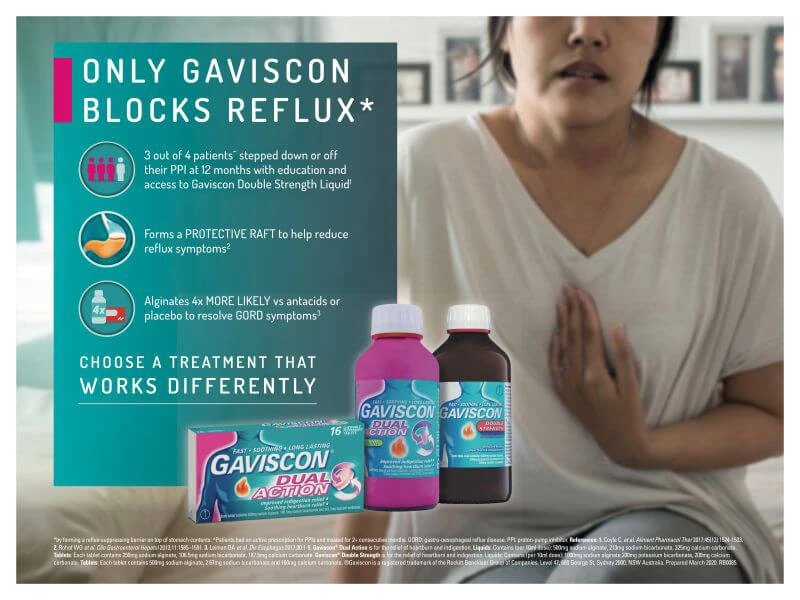
- Antacids that give instant relief and
- Slower-acting drugs that give relief but also heal. These are proton pump inhibitors such as Nexium and PantUp
It is perfectly safe to take the quick-acting antacids alongside the slower and more powerful acting Proton pump inhibitors.
Antacids include Gaviscon, Rennie, and Maalox. Gaviscon Advance is the strongest Antacid. There are a couple of types of longer-acting "healing" drugs which include Nexium. It can be taken with antacids for maximum relief.