
Types of Pill
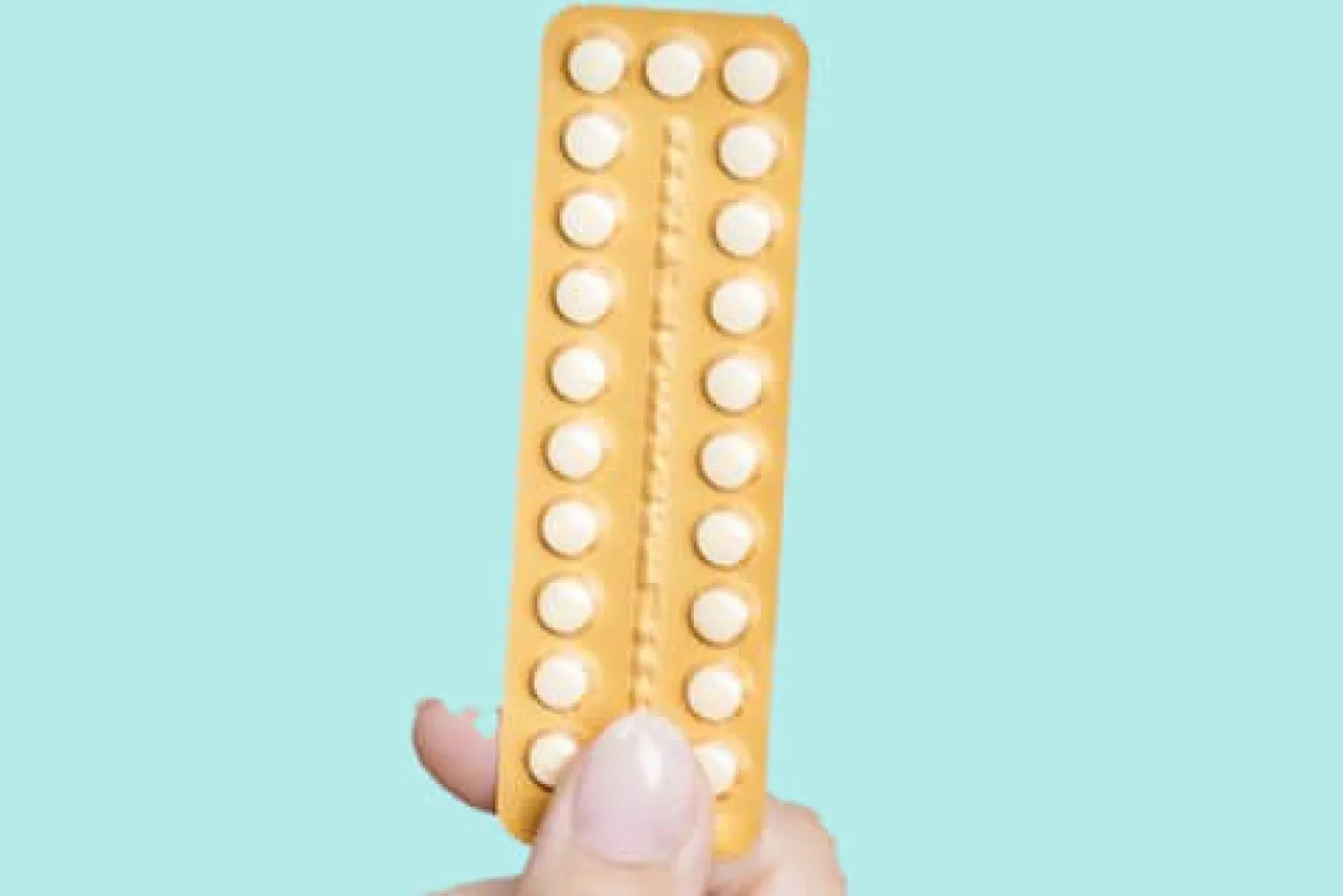
Types of Oral Contraceptive Pills
- Ingredients
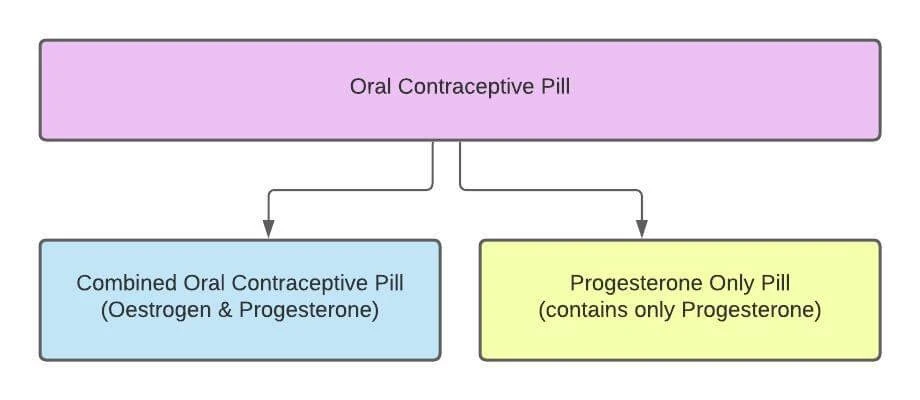
Contraception can contain Progesterone on its own or Oestrogen combined with Progesterone.
1. Combined Oral Contraceptive Pill (COC)
This Pill contains both Oestrogen and Progesterone.
2. Progesterone Only Pill (POP)
The POP is also called the Mini Pill. They are a great alternative when the COC is unsuitable because of health risks. There are two types of Mini Pills –
- one type contains desogestrel (Cerazette) – this is as effective as the COC
- the other type has norethisterone (Noriday) - this is less effective & must be taken at the same time each day.
Depending on the ingredients in your contraception, they have different modes of action, effectiveness and rules for taking them.
- Cyclical or Single Phase COC Pills
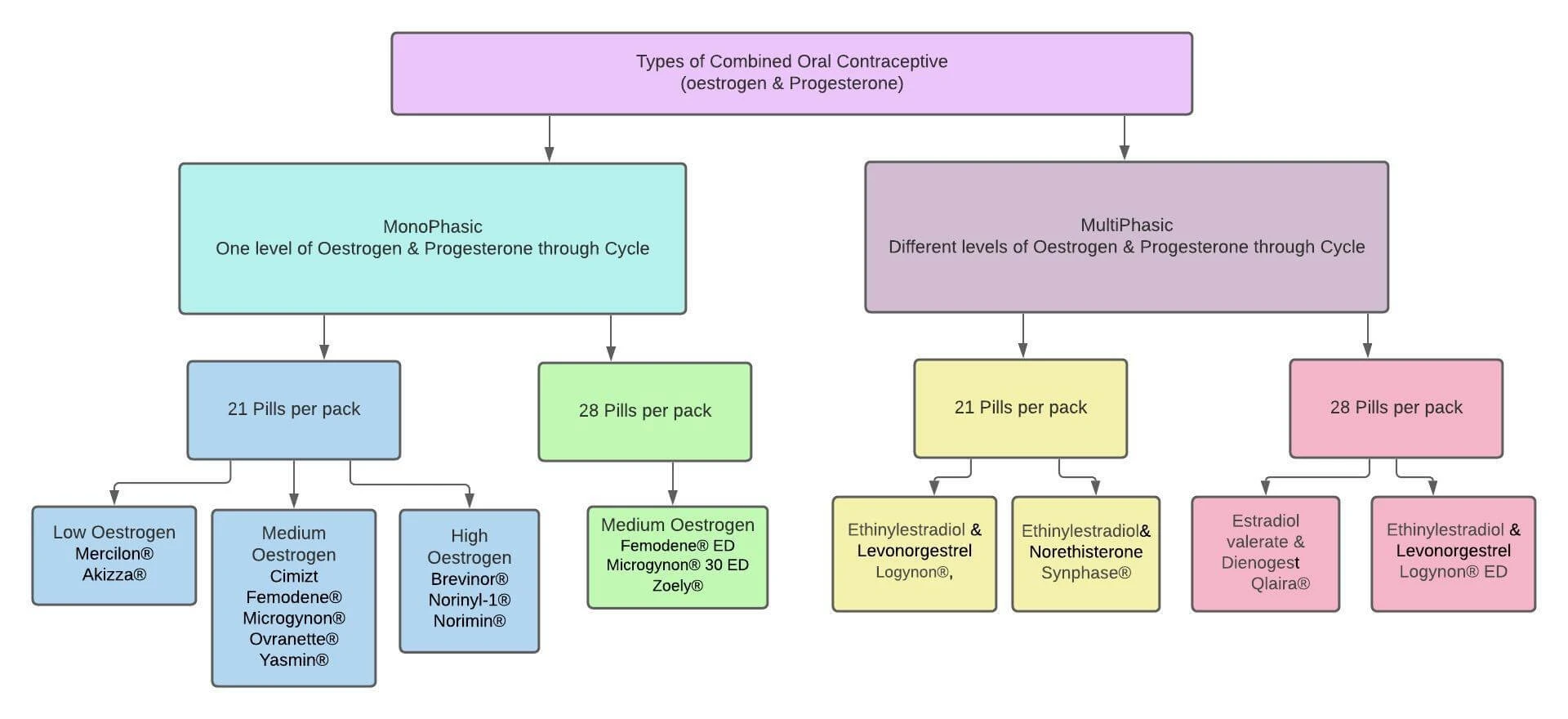
Pills that contain both Oestrogen and Progesterone can be either Single Phase (monophasic) or Cyclic (many phases).
With Monophasic (Single Phase) medicines, the amount of Oestrogen and Progesterone is the same in each tablet.
With Cyclic medicines, the pills contain different levels of Oestrogen and Progesterone as your cycle progresses. They mimic your natural cyclic more closely than monophasic.
- Low dose Pills
Low dose OCP contain less than 50mg of Oestrogen in each tablet. They are popular with women who are sensitive to the side effects of the OCP. Breakthrough bleeding can be an issue.
4. 21 Day or 28 Day Packs
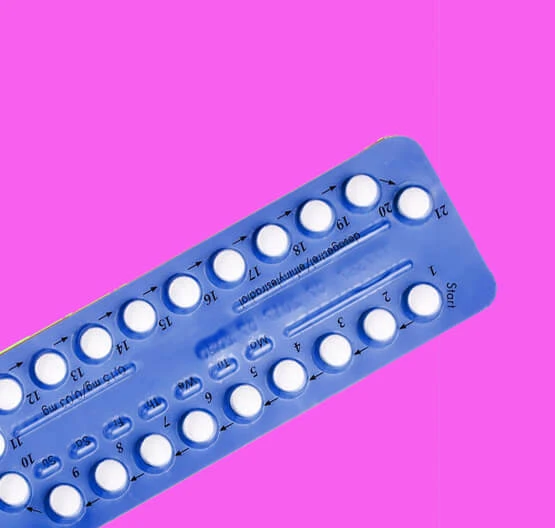
With a 21 day pack, all pills contain active ingredients. You take your Pill for 21 days and typically take a 7-day pill-free break. Withdrawal bleeding starts while on this break. It is not mandatory to take this break, and some women run one pack into another, so they get no bleed.
With a 28 day pack, take 21 tablets with active ingredients and 7 placeboes (dud) tablets. 28 Day Packs are convenient for forgetful people. Your bleed will start while on the seven day set of placebo tablets.
- POP – Mini Pill or Progesterone only Pill.
Here there is a low dose of Progesterone in each Pill. These are non-cyclical 28-day pills. The level of Progesterone is lower than what is used in the OCP, and there is no oestrogen. There are two types of Mini Pills:
- Desogestrel POP– these are as effective as the COC (99%) and yet can be used in women who are at health risk from taking Oestrogen.
- Norethisterone POP – these are less effective than the OCP (95 to 99% effective), and you must take this within 3 hours of the same time each day.
Summary of Types of Pills:
How Hormonal Contraception works
Combined Pill
- Their main mechanism of action is to stop the release of the egg.
- They also thicken the mucus at the cervix and so act as a partial barrier to sperm.
- Finally, they reduce the lining of the uterus. Without this lining, a fertilised egg has nothing to embed on and cannot survive.
Progesterone only Products
These work mainly by reducing the lining of the uterus (womb). This reduced lining stops a fertilised eggs from sticking to the womb and "implanting". They also thicken the mucus at the cervix. This extra mucus acts as a barrier against sperm. Without this stage, the fertilised egg cannot develop.
Desogestrel (Cerazette) also stops the egg's release (up to 90% of the time), and for this reason, it is considered as good as the combined Pill. Norethisterone has only a 60% probability of stopping the release of an egg.
Side effects of Hormonal Contraception
The side effects caused by Oestrogen and Progesterone (the two ingredients in the OCP) are different.
Oestrogen Adverse Effects
Side effects can occur for some women, but most have no harmful effects. Adverse effects include stomach upset, fluid retention (and associated weight gain), headaches & breakthrough bleeding.
The OCP is linked to heart disease in people who are:
- over 35 years,
- overweight,
- smoke
- have long term diabetes
- have a history of strokes, heart disease, or clotting problems
- have uncontrolled hypertension (high blood pressure) or
- have a history of breast cancer (which is a type of estrogenic cancer).
Above 50 years of age, the COC (Oestrogen & Progesterone) is generally not used (even if there are no risks of heart disease). After 50 years, medics prefer to prescribe the Mini Pill or Mirena Coil. Both of these contain only Progesterone.
Progesterone Adverse Effects
This hormone can cause tiredness, weight gain, skin breakouts and even ovarian cysts. Other reported side effects include headaches, breakthrough bleeding, breast tenderness and a reduced sex drive. Again these side effects are uncommon, and most resolve within a few weeks of taking this medicine.
Health Benefits of Hormonal Contraception
The COC does offer some health benefits (other than Contraception). These include:
- Hormonal Contraception reduces the risk of endometrial, colorectal and ovarian cancer These cancers are more common in women than men.
- The Pill allows you to regulate your cycle, giving predictability. You can decide if and when you choose to have a bleed and postpone a bleed for holidays or exams.
- The Pill can use used to minimise the symptoms of dysmenorrhoea and menorrhagia.
- Hormonal Contraception helps manage endometriosis, premenstrual syndrome (PMS) and polycystic ovary syndrome (PCOS).
- It also helps minimise menopausal symptoms and is used in perimenopausal and menopausal women who require Contraception. It maintains bone density in women who are entering menopause under the age of 50 years.
- The Pill can be of use in the treatment of acne. The OCP can be taken alongside Roaccutane in the management of severe acne.
Brands & Ingredients
Monophasic 21-day
- Ethinylestradiol 20 micrograms & Desogestrel 150 micrograms Bimizza®, Gedarel® 20/150, Mercilon®
- Ethinylestradiol 30 micrograms & Desogestrel 150 micrograms Cimizt®, Gedarel® 30/150, Marvelon®
- Ethinylestradiol 20 micrograms & Gestodene 75 micrograms Akizza® 20/75, Millinette® 20/75, Sunya® 20/75 Ethinylestradiol 30 micrograms & Drospirenone 3 mg Dretine®, Yacella®, Yasmin®, Yiznell®
- Ethinylestradiol 30 micrograms & Gestodene 75 micrograms Akizza® 30/75, Femodene®, Katya® 30/75, Millinette® 30/75
- Ethinylestradiol 30 micrograms & Levonorgestrel 150 micrograms Levest®, Microgynon® 30, Ovranette®, Rigevidon®, Elevin®, Maexeni®
- Ethinylestradiol 35 micrograms & Norgestimate 250 micrograms Cilique®, Lizinna®, Brevinor®
- Ethinylestradiol 35 micrograms & Norethisterone 1 mg Norimin®
- Mestranol 50 micrograms & Norethisterone 1 mg Norinyl-1®
Monophasic 28-day
- Ethinylestradiol 30 micrograms & Gestodene 75 micrograms Femodene® ED
- Ethinylestradiol 30 micrograms & Levonorgestrel 150 micrograms Microgynon® 30 ED
- Ethinylestradiol 30 micrograms & Nomegestrol acetate 2.5 mg Zoely®
Multiphasic 21-day
- Ethinylestradiol & Levonorgestrel - Here the Oestrogen (Ethinylestradiol ) changes from 30 to 40 to 30 micrograms as you go through the pack, and the Progesterone (Levonorgestrel) increases from 50 to 75 to 125 Micrograms. This cyclic mimics the natural change in hormones that occurs in a cycle. Logynon®, TriRegol®
- Ethinylestradiol & Norethisterone - Here the Oestrogen remains constant, and the Progesterone increases from 500 to 1000 to 500 micrograms. Synphase®
Multiphasic 28-day preparations
- Ethinylestradiol & Levonorgestrel - The Oestrogen moves from 30 to 40 to 30 micrograms, and the progesterone moves from 50 to 75 to 125 micrograms. Logynon® ED
- Estradiol Valerate & Dienogest - The Oestrogen decreases from 3mg to 2mg to 1mg, while the Progesterone increases from 2mg to 3mg. This Pill contains body identical oestrogen*. Qlaira
Progesterone Only Pills (Mini Pills)
- Desogestrel 75microgram – Cerazette, Feanolla, Moonia Zelleta
- Norethisterone 350microgram - Noriday
Ann O’Flynn B.Pharm, MA, BSc, MPSI
Ann is the owner of dPharmacy and has a particular interest in Health foods and supplements. Ann is a Tutor pharmacist and has gained numerous qualifications in alternative therapies - which she uses alongside her extensive clinical training. If you have any queries on medicines or health foods please reach out to us by email, text or phone.
 Chat online >>
 Call us on >>
 Email us at [email protected] >>
Disclaimer
Please be aware that the information on our site is for information only. While we hope you find it helpful, it is not our intention for our articles to be used as a basis for diagnosis or treatment. If you suspect you may have a health issue or wish to start taking any medicine, please consult your pharmacist, doctor or contact us directly. You can get in touch with us by phone, email, online chat or text. We would be delighted to run through any concerns you may have. Our goal is to deliver health directly to you - pleasantly and effectively. However, dPharmacy will not accept responsibility for any side effects or health damages from the use of medicines offered on this site.