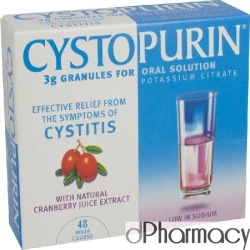




Cystopurin 3g Granules for Oral Solution (6)

Multibuy Deal
Out of stock!
Cystopurin is used for the relief of mild urinary tract infections
Ingredients
It contains the active ingredient potassium citrate. This neutralises the acids in the urine & relieves the burning/stinging sensation when urinating. It reduces the need to urinate so frequently, a common symptom of cystitis. It begins to work within a few hours.
Who can take Cystopurin
It can be used in Adults (including the elderly and children over 6 years). It is not recommended for children under 6 years.
Cystopurin contains 6 sachets of powder which you mix with water to make a cranberry flavoured beverage. It is low in sodium and flavoured with natural cranberry extract.
Cystopurin Dose
The dosage of Cystopurin is one 3g sachet dissolved in cold water up to three times daily for two days. All six sachets must be taken to complete the treatment. Ask your pharmacist if your symptoms last after 48 hours when using the sachets.
Caution with Cystopurin
Cystopurin is not to be taken without medical advice in people with heart disease or who are pregnant or breastfeeding. It is not to be used with people with phenylketonuria as it contains phenylalanine. You must ask your pharmacist before taking if on any medication. Cystopurin increases potassium and can interact with certain medicines leading to Hyperkalaemia.
Side effects of Cystopurin
Cystopurin may cause an upset stomach but this side effect can be treated by taking with plenty of water and with food.
Cystitis
Cystitis is an inflammation & irritation of the bladder. This can be caused by infection (viral or bactereial) or irritation.
The main symptoms of cystitis are a frequent need to urinate, a burning feeling when urination, an urgent need to wee and only passing a small, almost non existent amount, of urine when you do go to the toilet.
Cystitis is most common in women. It can occur in men and children but they should be seen by their pharmacist in case there is a serious cause to the cystitis.
Cystitis can be caused by:
- · using scented products in the intimate area (as this can lead to irritation)
- · using spermacides
- · wearing tight clothing
- · not drinking enough fluids which leads to dehydration which in turn leads the body to make uric acid crystals which irritate the bladder when being passed.
- · Not going to the toilet often enough and holding urine in too long
- · Sexual activity can bruise and irritate the lining of the bladder