



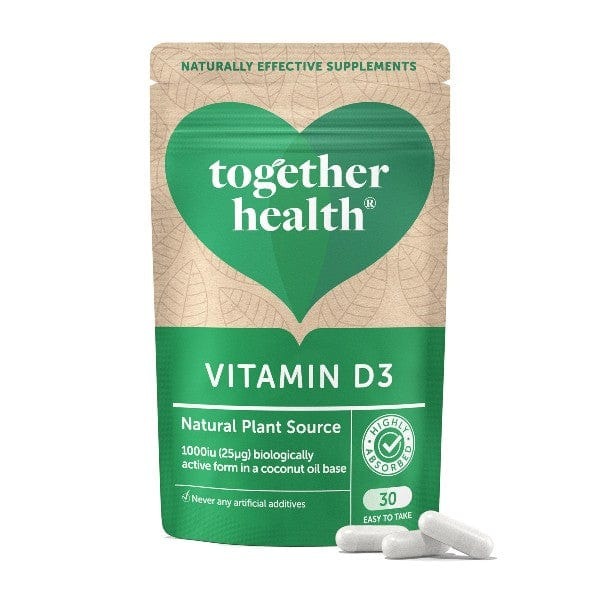
Together Vegan Vitamin D3 Food Supplement (30caps)
Out of stock!
Vegan vitamin D3 from lichen, not sheep wool oil, and more effective than typical vegan D2 supplements.
Together Vegan Vitamin D3 delivers 1000IU (25 micrograms) of cholecalciferol from wild-harvested lichen in a base of coconut oil and tapioca extract. The lichen grows in remote, cool mountainous climates in North America and is sustainably harvested from a designated site that fully regenerates between collections. The capsule shell is plant-based cellulose.
- Free from gluten, dairy, lactose, soya, wheat, yeast, GMOs, and artificial additives of any kind.
- Certified organic, certified carbon neutral, and manufactured in Britain.
- The packaging is compostable, made from renewable resources rather than plastic.
Wild Lichen Vitamin D3: Vegan D3
Most vitamin D3 comes from lanolin, the grease in sheep’s wool. Together sources D3 from wild-grown lichen, a plant-like organism that is one of the only natural plant-based sources of cholecalciferol. D3 is 87% more effective than D2 (ergocalciferol) at raising and maintaining blood levels of 25-hydroxyvitamin D. It has a longer half-life, meaning each dose sustains your levels for longer between doses. Lichen-derived D3 is chemically identical to the D3 your skin produces from sunlight.
How Much Vitamin D Should I Take in Ireland?
The FSAI recommends 400IU for the general adult population. Clinical guidelines increasingly suggest 800-1000IU for adults over 50, those with limited sun exposure, and people with darker skin. At 1000IU (25mcg), this capsule provides the dose most commonly recommended by pharmacists for meaningful daily adult protection. Ireland sits between 51° and 55° north. From October to March, UVB radiation is too weak for skin synthesis.
Even in summer, SPF 30 blocks 97% of the UVB that produces vitamin D. The typical Irish diet provides only 120-200IU per day.
Together Vitamin D3 for Bones & Calcium Absorption
Vitamin D contributes to the normal absorption of calcium and phosphorus and to the maintenance of normal bones and teeth. The coconut oil base provides the fat needed for this fat-soluble vitamin to be absorbed effectively. This is particularly important for adults over 50, postmenopausal women, and anyone concerned about bone density. Vitamin D also contributes to normal muscle function, which is relevant for fall prevention in older adults.
Together Vegan D3 Immunity &Energy
Vitamin D contributes to the normal function of the immune system. Winter in Ireland is when vitamin D levels and immune defences drop together. 47% of Irish adults have insufficient levels during the darker months. Correcting deficiency reduces the frequency and severity of respiratory infections. If you feel persistently tired and run down from October onwards, low vitamin D is one of the first things worth checking.
Vitamin D Deficiency Symptoms
People with low vitamin D do not say they are deficient. They say they are exhausted, their joints ache, they keep catching colds, or they cannot shake a low mood. Common signs include:
· Persistent tiredness that does not improve with rest
· Muscle weakness, especially in the legs and lower back
· Bone pain and aching joints, often dismissed as age or wear and tear
· Frequent colds, chest infections, and slow recovery
· Low mood, irritability, and seasonal depression
· Hair thinning, brain fog, and poor concentration
Vitamin D & Medications
The most commonly dispensed medications in Ireland, metformin, SSRIs, statins, blood pressure tablets, and Eltroxin, are collected by patients who are frequently also low in vitamin D. The symptoms overlap: fatigue, mood changes, aches.
Insulin resistance worsens with deficiency. Vitamin D receptors sit in mood-regulating brain areas.
Obesity traps vitamin D in fat tissue.
Hashimoto’s thyroiditis is strongly linked to low levels.
People with psoriasis spend heavily on Dovobet, which contains a synthetic vitamin D analogue, without realising that adequate internal levels can complement their topical treatment.
Addressing a deficiency does not replace medication but can noticeably improve day-to-day wellbeing.
Certified Organic Vitamin D3
- Together is certified organic, certified carbon neutral, and uses compostable packaging made from renewable resources.
- The capsule contains just three ingredients: coconut oil, tapioca extract, and lichen-sourced D3.
- No fillers, no flowing agents, no artificial preservatives.
- The coconut oil provides the fat needed for vitamin D absorption in a format that does not require taking the capsule with a fatty meal.
- Together is family and friends owned, and all products are manufactured in Britain.
Take one capsule daily with food. Vitamin D is fat-soluble, and the coconut oil base aids absorption, but taking with a meal is still recommended. Morning or midday is preferred. Some people find that vitamin D taken late in the day can disrupt sleep.
Should I Take Vitamin D3 1000IU with K2?
At 1000IU, a normal diet typically provides enough K2 from fermented foods, dairy, and meat. If you increase to 2000IU or above, or if you also take calcium supplements, adding K2 (MK-7 form) becomes a sensible choice. K2 directs calcium into bones and teeth and away from soft tissues and arteries.
Supplements to Take With Vitamin D3
· Vitamin K2 (MK-7): directs calcium to bones, most important at higher D3 doses
· Magnesium: required for the enzymes that convert vitamin D to its active form
· Calcium: D3 increases absorption, but adequate calcium from diet is still needed
· Omega-3: fat-soluble, often deficient alongside D, complementary benefits
What Lowers Your Vitamin D Levels?
· Indoor lifestyle, office or shift work
· SPF 30 blocks 97% of vitamin D producing UVB
· Age: skin production drops 75% by age 65
· Obesity: vitamin D trapped in fat tissue, higher doses needed
· Medications: corticosteroids, anticonvulsants, orlistat, PPIs
· Gut conditions: coeliac, Crohn’s, post-bariatric surgery
· Darker skin: melanin reduces UVB absorption
· Winter in Ireland: no UVB October to March
Can You Take Too Much Vitamin D?
At 1000IU, toxicity is not a concern. The EFSA upper limit is 4000IU daily for adults. You could take four capsules and still be at the safe limit. Do not exceed 4000IU without medical supervision. Vitamin D is fat-soluble and does accumulate in the body.
Vitamin D Drug Interactions
· Thiazide diuretics: can raise blood calcium alongside vitamin D
· Digoxin: elevated calcium increases heart rhythm risk
· Anticonvulsants: increase liver breakdown of vitamin D
· Orlistat: blocks fat absorption, separate by 2 hours
· Statins: mild interaction with vitamin D metabolism
Speak to your pharmacist before starting if you take regular medication.
How Long Does Vitamin D3 1000IU Take to Work?
Blood levels reach a new steady state in 6-8 weeks. Energy and mood improvements typically appear within 4-8 weeks. Bone density builds over 6-12 months. Daily dosing is more effective than sporadic use.
FAQs: Together Vitamin D3 Caps
Is Together Vitamin D3 Certified Organic?
Yes. Together is certified organic by an internationally recognised certifying body. The lichen is wild-harvested from sustainable sites in North America, and the entire supply chain meets organic standards.
Is Together Vitamin D3 Carbon Neutral?
Yes. Together is a certified carbon-neutral brand. The packaging is compostable and made from renewable resources rather than plastic.
Why Is Vitamin D Deficiency So Common in Ireland?
Ireland’s latitude means no UVB for skin synthesis for six months of the year. Food provides only 120-200IU daily. There is no mandatory food fortification. SPF blocks production year-round. 47% of Irish adults are insufficient in winter.
Does Vitamin D Help With Depression and SAD?
Vitamin D receptors are concentrated in mood-regulating brain areas. Deficiency is linked to seasonal affective disorder, particularly in Ireland where sunlight and D levels drop together in winter. Correcting a deficiency can improve mood alongside existing treatment.
Is Together Vitamin D3 Free From Soya?
Yes. This product is free from soya, along with gluten, wheat, dairy, lactose, nuts, yeast, GMOs, and all artificial additives. The coconut oil base and tapioca extract are the only other ingredients, alongside the lichen D3.
Can I Get Enough Vitamin D From Food in Ireland?
Unlikely. Oily fish, egg yolks, and fortified dairy are the main sources, but the typical Irish diet provides only 3-5mcg per day. You would need 2-3 portions of oily fish daily to reach 1000IU.
Do I Need Vitamin D Year-Round in Ireland?
Many practitioners now recommend year-round supplementation at northern latitudes. Irish summers are unpredictable, and consistent daily dosing removes the guesswork about whether you have had enough sun exposure.
What Makes Together Different From Other Vitamin D Brands?
Together combines certified organic ingredients, carbon-neutral production, compostable packaging, and wild-harvested lichen D3 in a coconut oil base. It is independently owned and manufactured in Britain with full supply chain transparency.
Safety Info: Together Vitamin D3
- Vitamin D is safe at recommended doses.
- People with sarcoidosis, some lymphomas, or hyperparathyroidism should consult their doctor.
- The HSE recommends vitamin D for pregnant and breastfeeding women.
- If taking more than 2000IU daily, periodic blood testing is sensible.